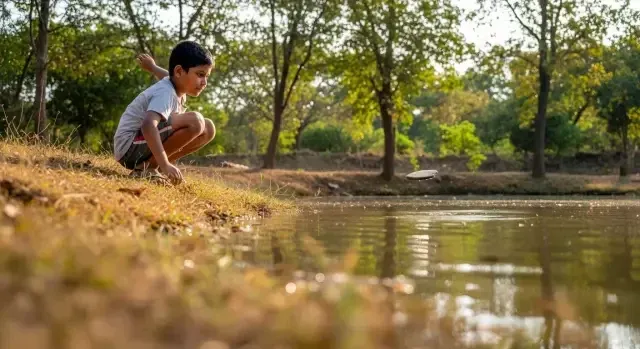
🌱 The Hidden Crisis Beneath Your Feet
If you've bought farmland near Bangalore—especially in corridors like Ramanagara, Kanakapura, or Doddaballapur—chances are you're dealing with "red loam" soil. While it has great drainage, decades of chemical-heavy farming may have stripped it of its most vital ingredient: Organic Carbon.
Without healthy soil microbiology, even the best fertilizers just wash away. In 2026, the focus for smart farm owners has shifted from buying inputs to building soil.
📉 The Problem with Bangalore's Red Soil
Historically, farmers around Bangalore aggressively used urea and DAP (Diammonium Phosphate) to force high yields from vegetable crops. This chemical barrage destroys earthworms and beneficial microbes.
The result:
- Hard, compacted soil that repels water (poor water retention).
- Low organic carbon (often below 0.3%, whereas healthy soil needs 1% - 2%).
- Plants that are highly susceptible to pests and climate stress.
🧪 Step 1: The Reboot (Testing & Corrections)
Before you plant a single sapling, you must know your baseline.
- Comprehensive Soil Test: Don't just test for NPK (Nitrogen, Phosphorus, Potassium). Test for Organic Carbon (OC), pH, and micronutrients like Zinc and Boron.
- pH Balancing: Red soil often leans acidic. If your pH is below 6.0, an application of agricultural lime might be necessary before planting.
🌿 Step 2: The Biological Approach
The goal is to bring life back to the dirt, turning it back into soil.
- Green Manuring: Before your main crop, plant leguminous crops like Sunn Hemp (Sanabu) or Cowpea. Right before they flower, plow them back into the earth. This naturally fixes nitrogen and adds massive amounts of biomass.
- Jivamrutha: This traditional liquid concoction of cow dung, cow urine, jaggery, pulse flour, and virgin soil acts as a microbial culture. Applying it accelerates the breakdown of organic matter.
- Mulching: Never leave your soil naked. Cover the base of your trees with dry leaves, crop residue, or coconut husks. This prevents the sun from baking the soil, retains moisture, and suppresses weeds.
🏛️ Tapping into "Vasudhamruta" (2026 Focus)
The Karnataka Government has recognized the soil crisis and heavily promoted schemes supporting natural agriculture.
The broader push towards organic farming, often encapsulated in initiatives like Vasudhamruta, provides a framework and sometimes subsidies for adopting these practices.
What you can leverage:
- Subsidies on organic inputs and compost pits.
- Support for setting up on-farm vermicompost units.
- Expert guidance from local Krishi Vigyan Kendras (KVKs).
Note: If you are part of a managed farmland community, ensure your management company is actively utilizing these government schemes to reduce operational costs.
⏱️ The Realistic Timeline
Rebuilding soil takes time. It is not an overnight fix.
- Year 1: Getting pH right, doing initial green manuring, and applying heavy compost. (You will not see magic yields yet).
- Year 2: Earthworms start returning. The soil feels spongier and needs slightly less watering.
- Year 3+: Organic carbon crosses the healthy threshold. Trees show rigorous growth and high resilience to dry spells.
If you are buying managed farmland, ask the developer point-blank: "What is your soil restoration protocol?" If they only talk about NPK fertilizers, walk away.
Connect With Us
Interested in learning more?
Share your details below and our team will guide you through our managed farm estates.
Hiliving Estates
Investment Advisor & Real Estate Expert
Hiliving Estates is a senior real estate analyst and investment advisor at HiLiving Estates. With extensive expertise in Karnataka's managed farmland sector, they provide data-driven insights into agricultural investments, legal due diligence (PTCL Act), and high-yield property management.
View Credentials